
Rezoning Proposal for more homes and better access to open spaces
Details about the Rezoning Proposal
We’re proposing to increase the number of homes on the western side of Glenfield station from 3,900 to around 5,200. This will be achieved by allowing a wider range of housing types, locating taller buildings near the train station, proposing a new local centre to the west, amending heights around the town centre and creating greater access to diverse green open spaces.
Take a virtual tour of the proposal town centre
Image 1 of 5
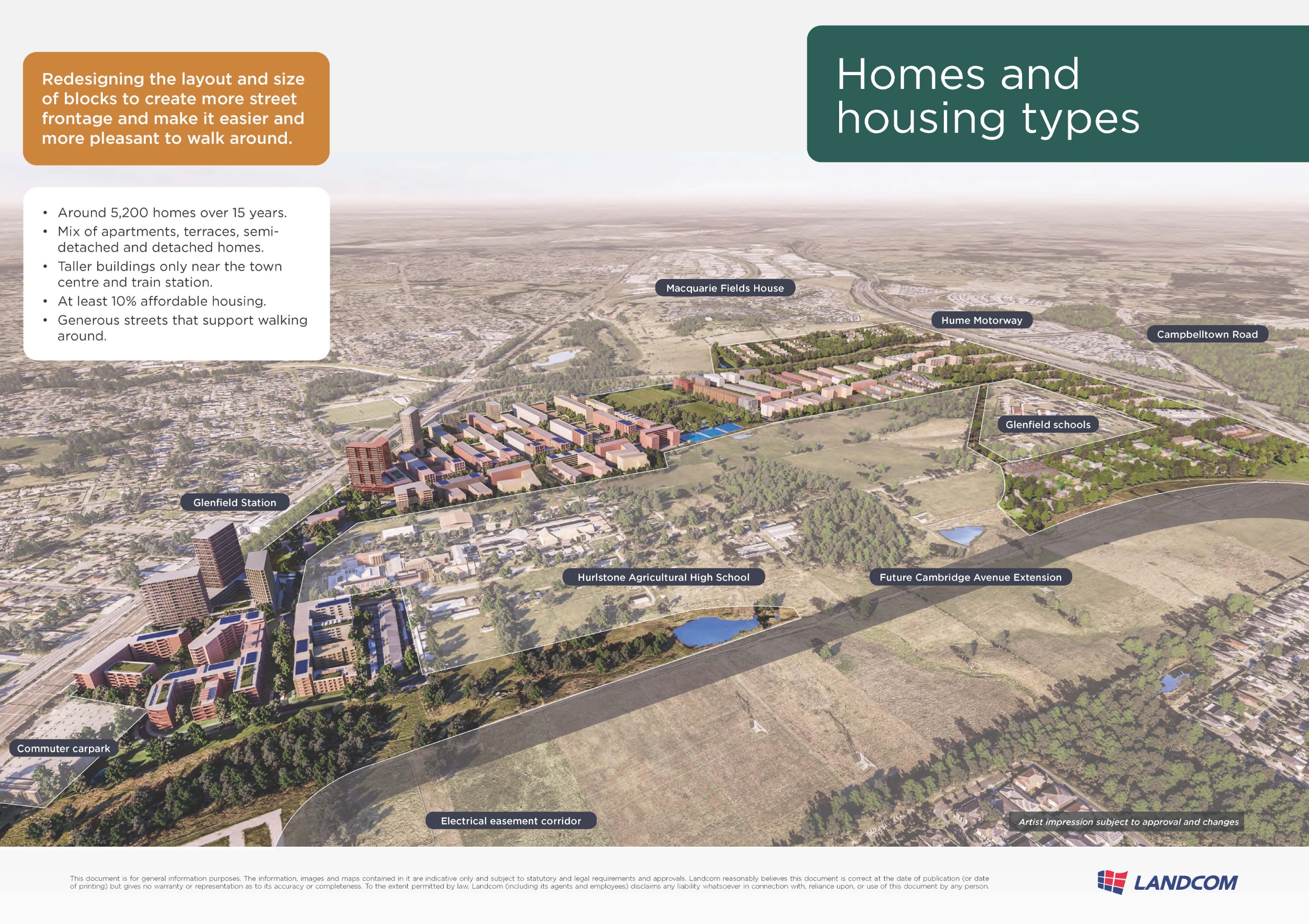
Artist impression: aerial view of Glenfield proposed development
Artist impression: aerial view of Glenfield proposed development
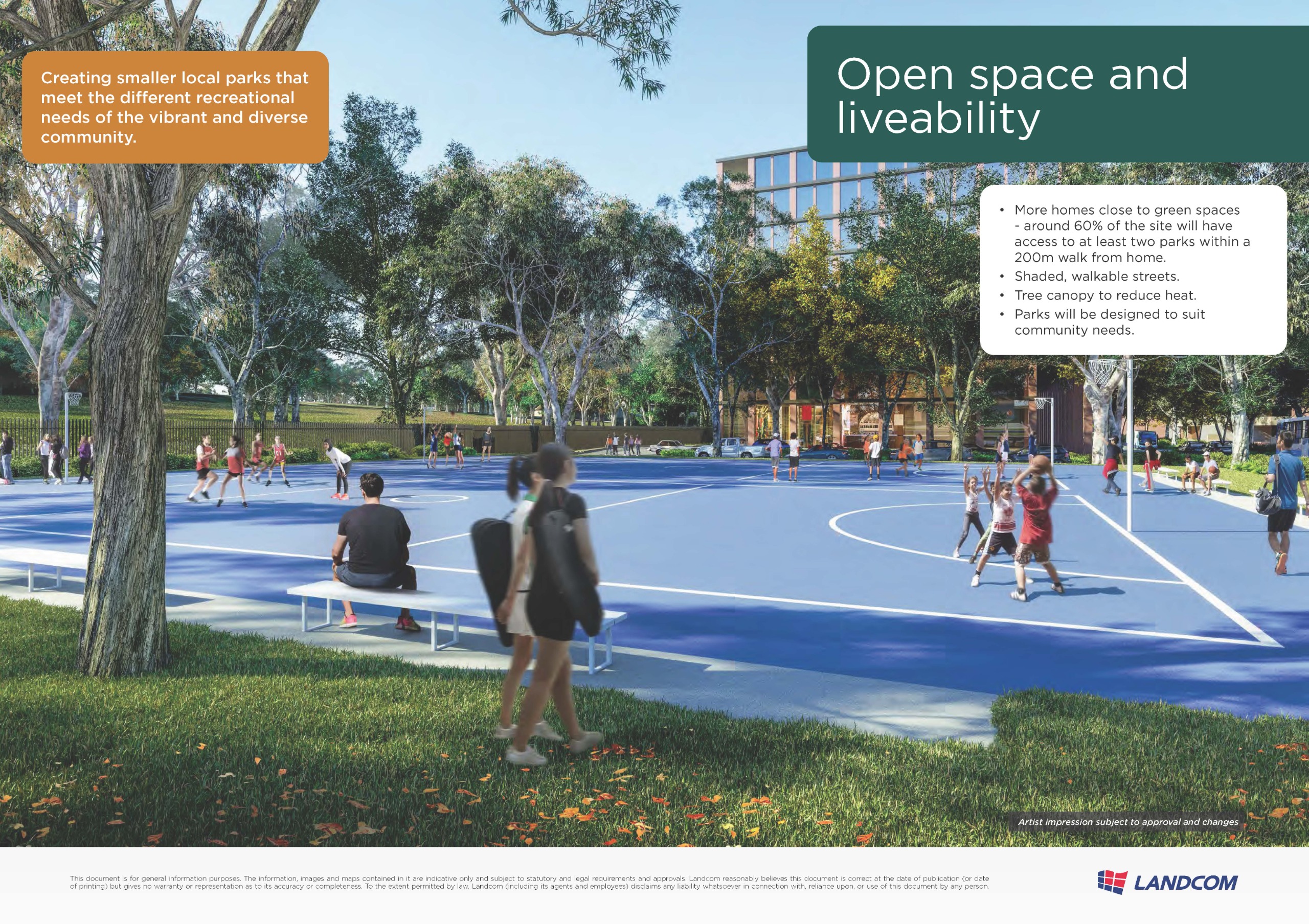
Artist impression of the proposed open space courts
Artist impression of the proposed open space courts
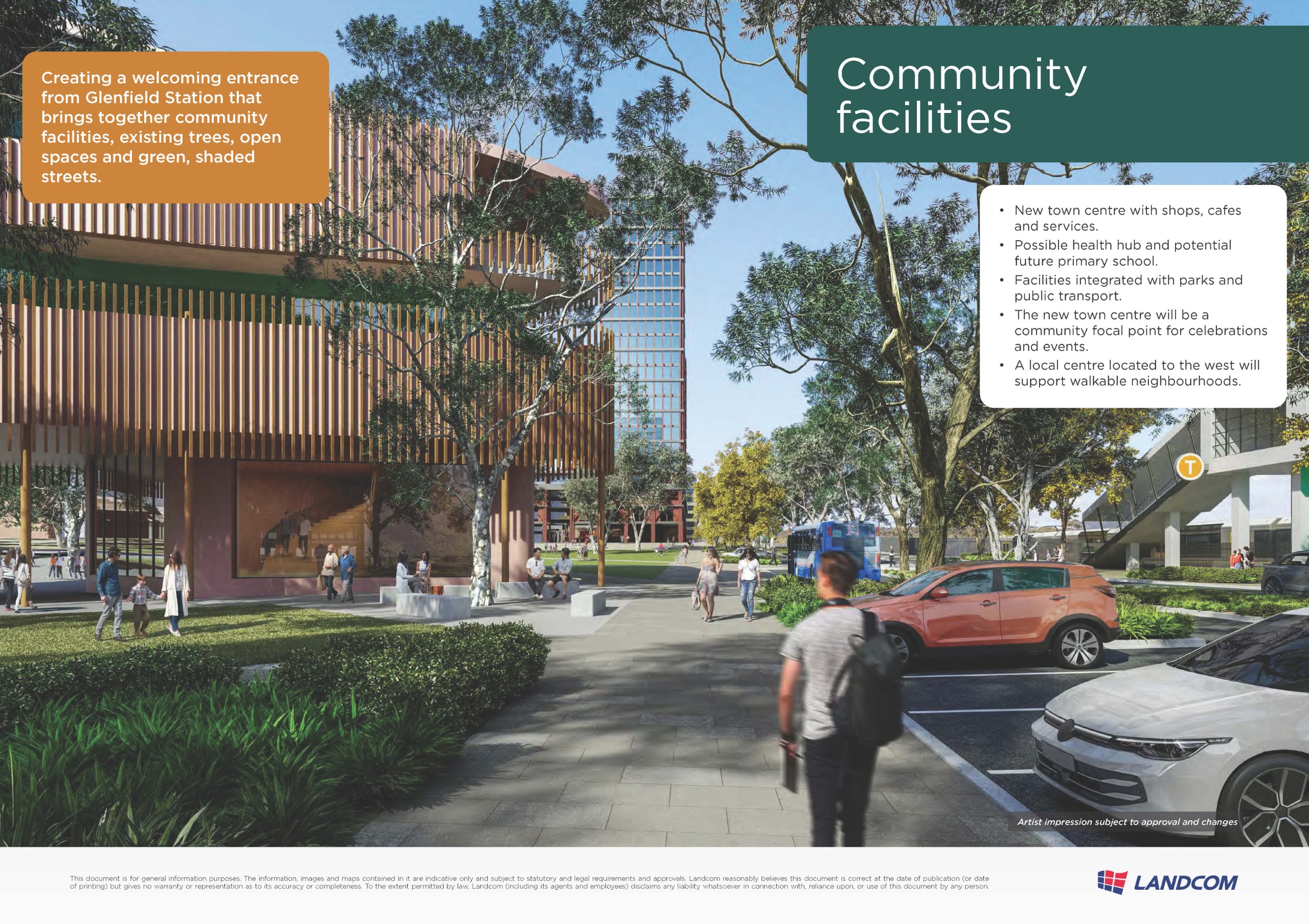
Artist impression of the proposed connection to the Glenfield Station courts
Artist impression of the proposed connection to the Glenfield Station
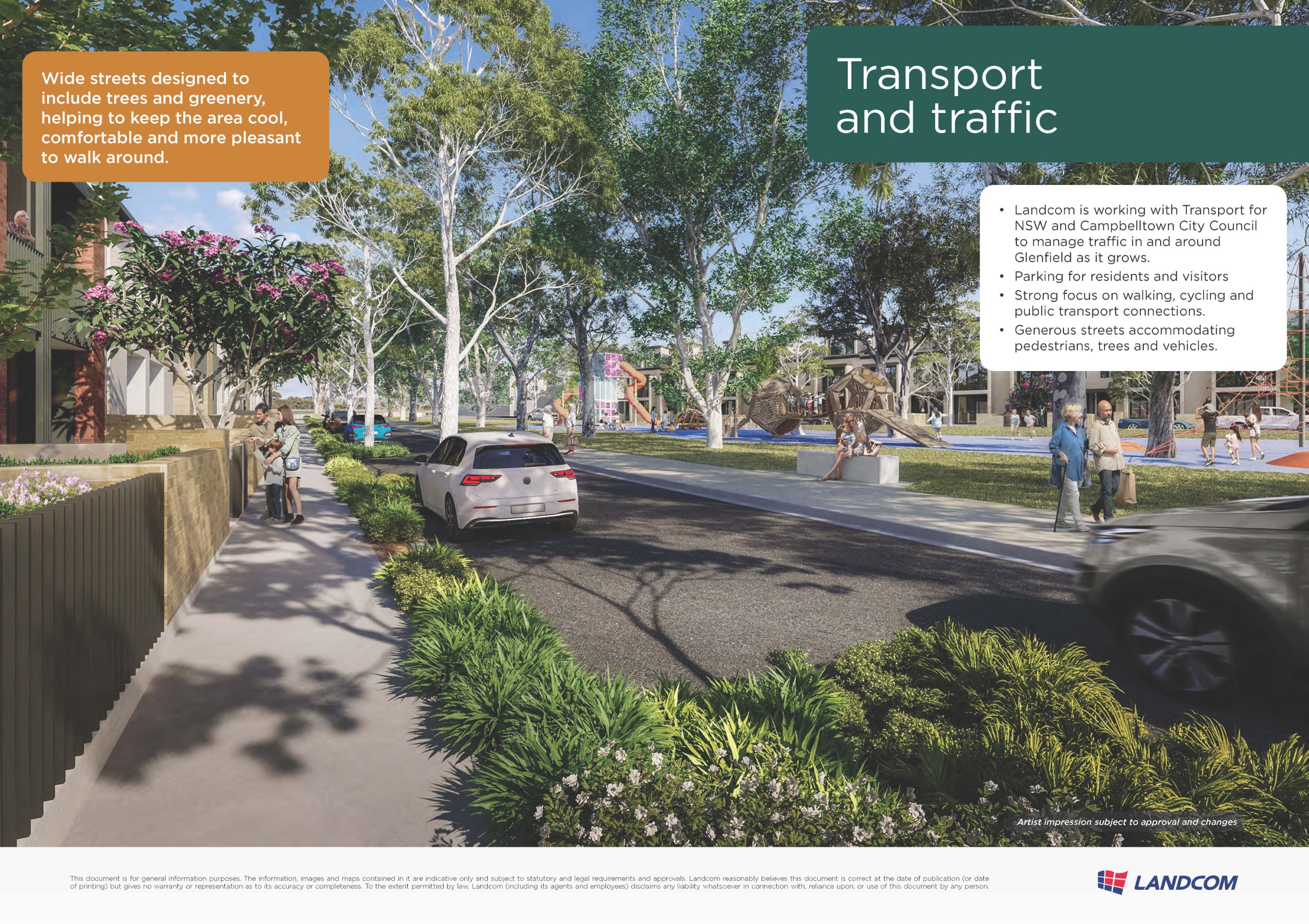
Artist impression of a residential park
Artist impression a residential park
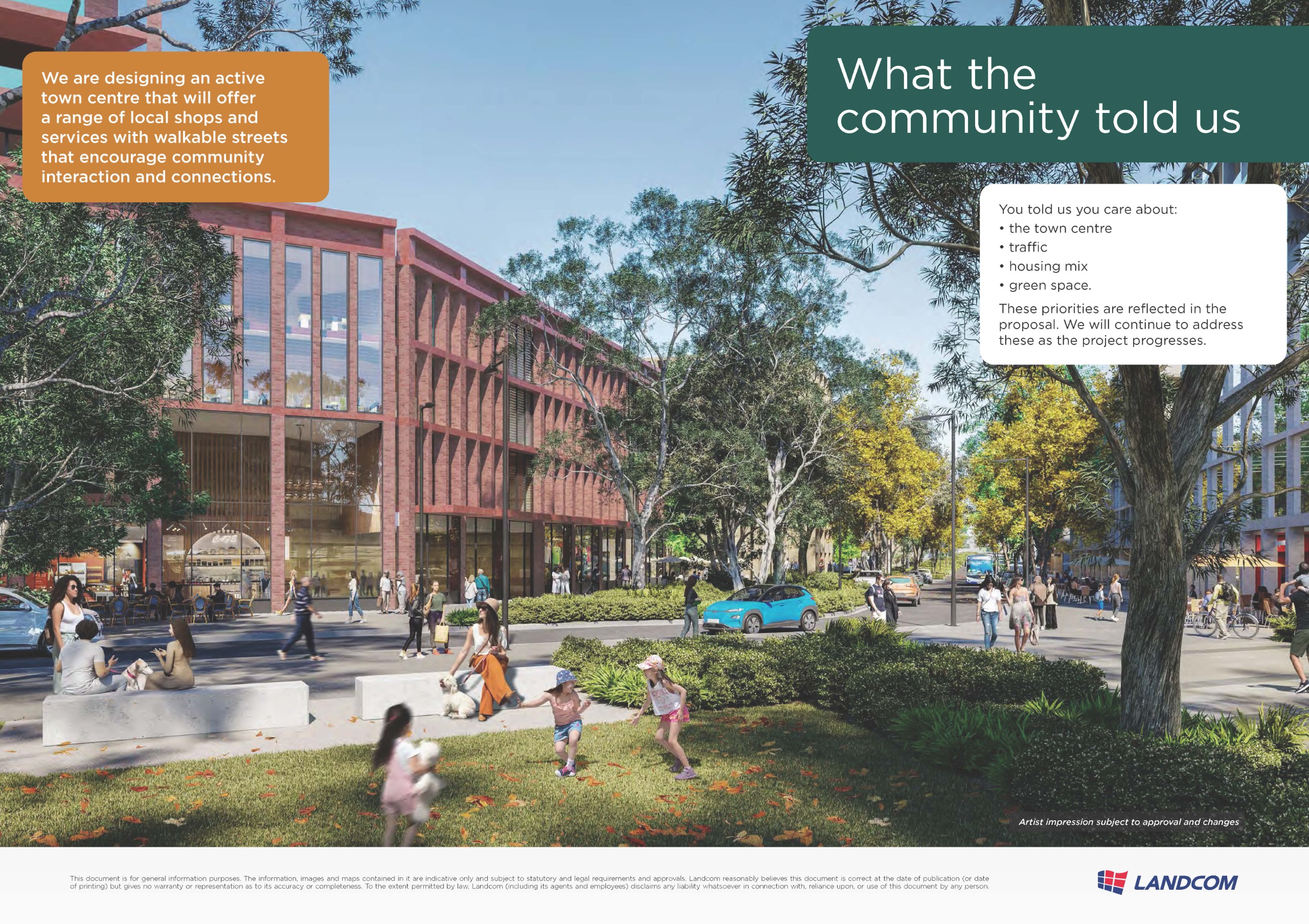
Artist impression of the town centre
Artist impression of the town centre
FAQ
General
Landcom has been working to re-shape the existing structure plan to create a vibrant, liveable neighbourhood. This includes making changes to the structure plan to create more homes on the western side of Glenfield with better access to parks and open spaces. We’ve submitted a Rezoning Proposal to the NSW Department of Planning, Housing and Infrastructure. It’s now on public exhibition.
It’s the first step in updating planning controls for the land. It explains why changes are needed, what changes are proposed and how they’ll guide future development. It guides how land can be used and what can be built in an area. The Department will assess the proposal.
It is a document that sets out how the land will be used— for the future location of homes, parks, shops, roads and services. It is the basis for amendments to the relevant planning controls. It helps councils and communities plan for growth. It doesn’t include building designs. Future Development Applications will be assessed against the Structure Plan and supporting planning controls.
We’re proposing to increase the number of homes on the western side of Glenfield station from 3,900 to around 5,200. This will be achieved by allowing a wider range of housing types, locating taller buildings near the train station, proposing a new local centre to the west, amending heights around the town centre and creating greater access to diverse green open spaces.
Housing
There’ll be a mix of apartments, terraces, semi-detached and detached homes — to suit different household sizes, life stages and budgets.
We are proposing to build around 5,200 homes over the next 15 years. This includes a mix of:
- apartments: around 4,500 dwellings
- attached dwellings (e.g. terraces): around 400 dwellings
- detached dwellings: around 300 dwellings.
10% of these homes are proposed to be delivered as affordable rental housing - Delivery of affordable housing is subject to funding/subsidies and partnership with a Community Housing Provider.
Yes. At least 10% of homes will be affordable rental housing and managed by a community housing provider. Subject to funding/subsidies and partnership with community housing providers.
Taller buildings are proposed near the train station and town centre to support walkability, public transport and local services. These areas will be pedestrian friendly, active and well-designed.
It is proposed several buildings that will be up to 22 storeys near the town centre, with heights stepping down further west. The taller towers are proposed to be slender and the heights of other buildings in the town centre have been lowered to improve the overall urban design outcome. See the Structure Plan for details.
Yes, the Rezoning Proposal includes changes to minimum lot sizes to support a greater mix of housing types. These changes are focused in areas west of the playing fields and aim to provide more diverse and affordable options.
Smaller lots—ranging from approximately 125m² to 300m²are proposed to enable well-designed small lot homes and attached dwellings. These homes will be located near open space and will be guided by design controls to ensure quality outcomes. The houses will support smaller households that lack appropriate housing choice in the local area.
In the heritage precinct, south of the railway line, minimum lot sizes are proposed to reduce from 1,200m² to 600m², while still allowing for generous garden settings in line with heritage advice.
These changes are part of a broader strategy to create a
walkable, inclusive neighbourhood with a variety of housing choices supporting
a diverse local community.
It means building more homes on well located sites in a way that enhances liveability with good design, green space, transport access and a strong sense of community. At Glenfield, this means a mix of housing types, tree-lined streets, parks, and a vibrant town centre that make higher-density living feel spacious, connected and welcoming.
Community facilities
The town centre will include shops, cafés and services. There’ll be community spaces, parks, a possible health hub and potential future primary school.
All homes in the neighbourhood will be located within approximately 400m walking distance of a park or open space. In fact, around 63% of homes will be within 200m, prioritising convenient access to diverse green spaces.
These areas will be thoughtfully landscaped and designed to
include places to sit, play, and exercise; supporting a healthy and active
lifestyle for residents of all ages.
Heritage and culture
Yes. The significance and proximity of Macquarie Fields House and the Hurlstone Agricultural High School have been considered in the design. The site’s Aboriginal, post-colonial and ongoing cultural heritage will be respected and celebrated.
The design of Glenfield is being shaped in collaboration with First Nations knowledge holders to ensure the site’s cultural significance is recognised and respected. This includes:
- protecting cultural markers like scar trees
- designing paths and spaces that reflect cultural stories
- embedding First Nations perspectives in the landscape
Sustainability
- More sustainable buildings: minimising energy and water use.
- Cooler streets: trees and shade make walking and outdoor life more comfortable.
- Better transport: safe paths and strong public transport links reduce car use.
- Resilience: climate-smart design helps the community handle heatwaves and change.
We’re aiming for best-practice outcomes:
- mandatory sustainability requirements in buildings
- shaded, walkable streets
- tree canopy to reduce heat
- cycling and public transport connections
- goals for carbon-neutral and net zero-waste outcomes.
Traffic and transport
Walking builds a healthier, more connected community. Glenfield’s location makes it easy to get around without a car. Walkable places are safer, more social and support local communities and businesses.
The commuter car park near Glenfield Station is owned and managed by Transport for NSW and is not part of the Rezoning Proposal.
For enquiries or updates regarding commuter parking, we recommend contacting Transport for NSW directly.
Yes. Parking will be provided for residents and visitors. Streets will support walking, cycling and public transport.
We are working with Transport for NSW and Campbelltown City Council to manage traffic in and around Glenfield as it grows.
Future traffic studies will guide upgrades to roads, signals and intersections.
A key project is the Cambridge Avenue extension, which is being delivered by Transport for NSW.
While the Cambridge Avenue extension is a separate infrastructure project, Landcom’s development is able to progress independently of its completion.