
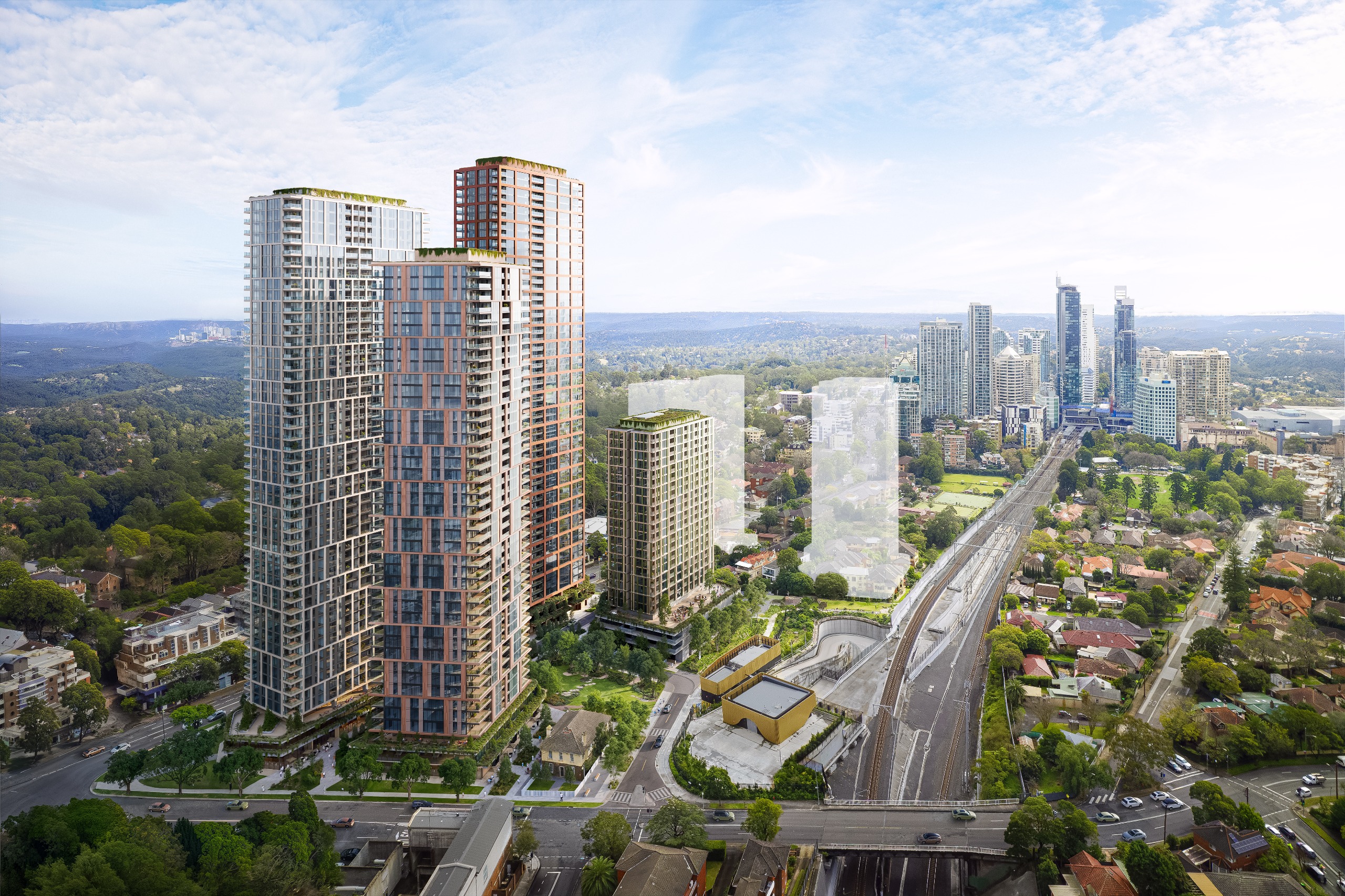
Landcom is planning to transform the former Sydney Metro construction site at 607 Pacific Highway, Chatswood, into a vibrant, well-designed neighbourhood with high quality apartments, rental housing for essential workers, shops and public spaces.
In the future, the development could support up to 1,500 apartments in a range of sizes and styles, helping to improve choice for renters and buyers. Future residents will be close to public transport, restaurants, shops, services, schools and health facilities, including Royal North Shore Hospital – one of Sydney’s largest hospitals.
Our vision is to create a connected, sustainable and inclusive community with:
- 180 build-to-rent apartments offered to essential workers like nurses, paramedics, teachers, police officers and firefighters at a discount to market rent, through a separate subsidy
- up to 1,300 additional apartments with a mix of affordable rental housing and homes to buy that will be delivered by other developers
- shops and services
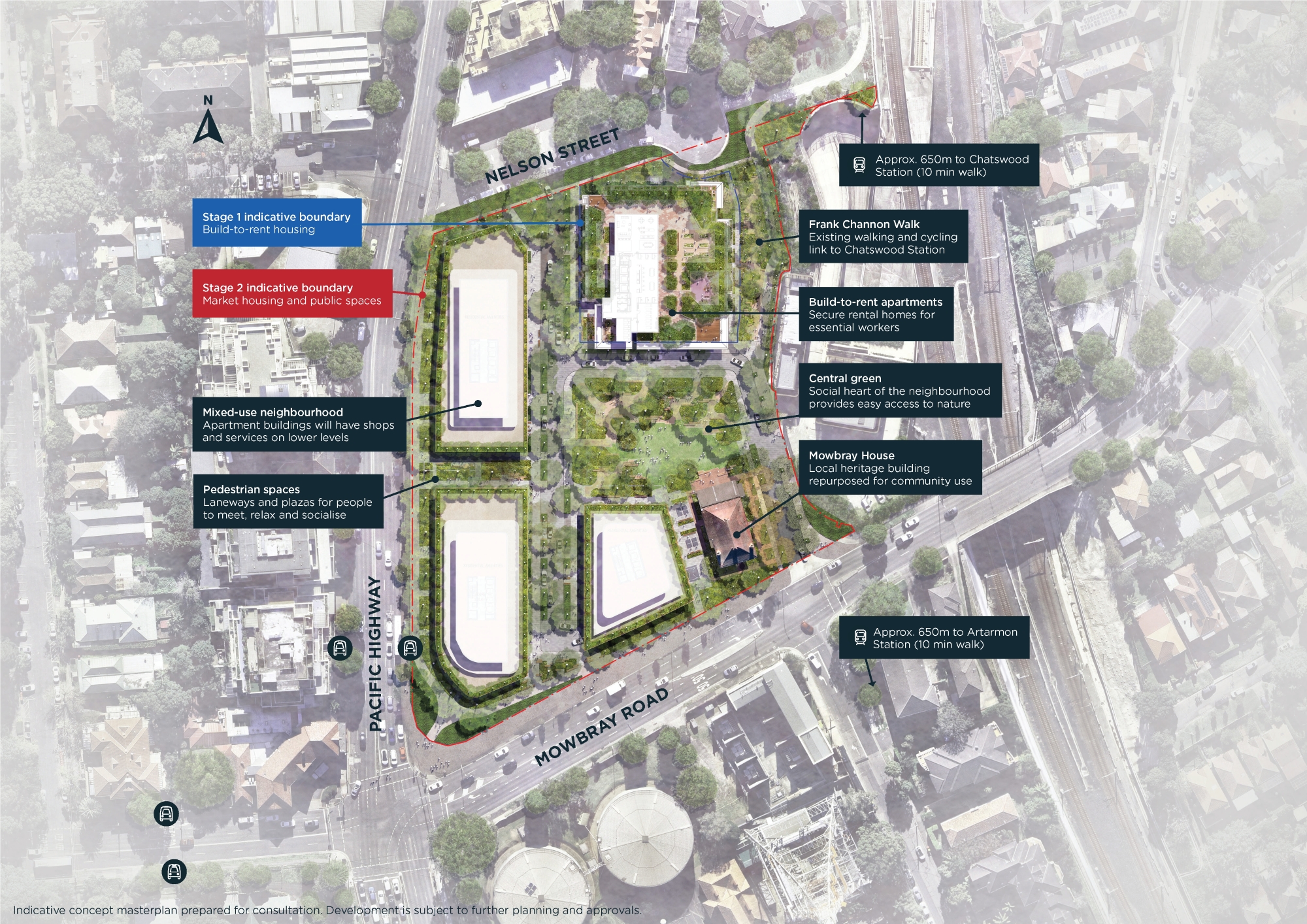
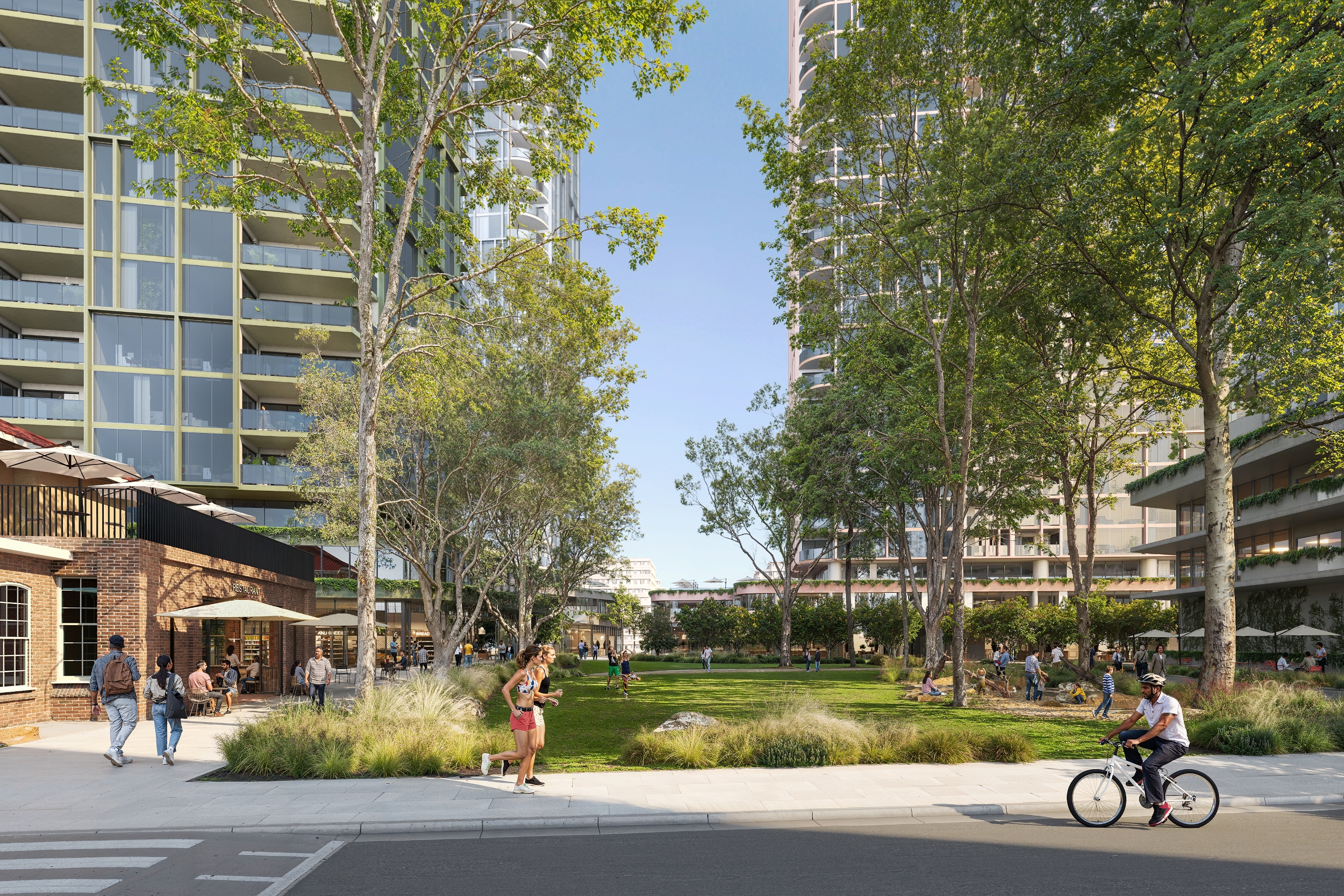
- outdoor spaces for people to meet, relax and socialise, including a village green, native greenery, shaded seating areas and public art
- future community use of heritage-listed Mowbray House
- walking and cycling connections to the wider area.
The project is supported by the NSW Government’s $450 million investment into Landcom to deliver 400 build-to-rent homes for essential workers in metropolitan Sydney, closer to their jobs and services.
Project information
Our plans for rental homes for essential workers
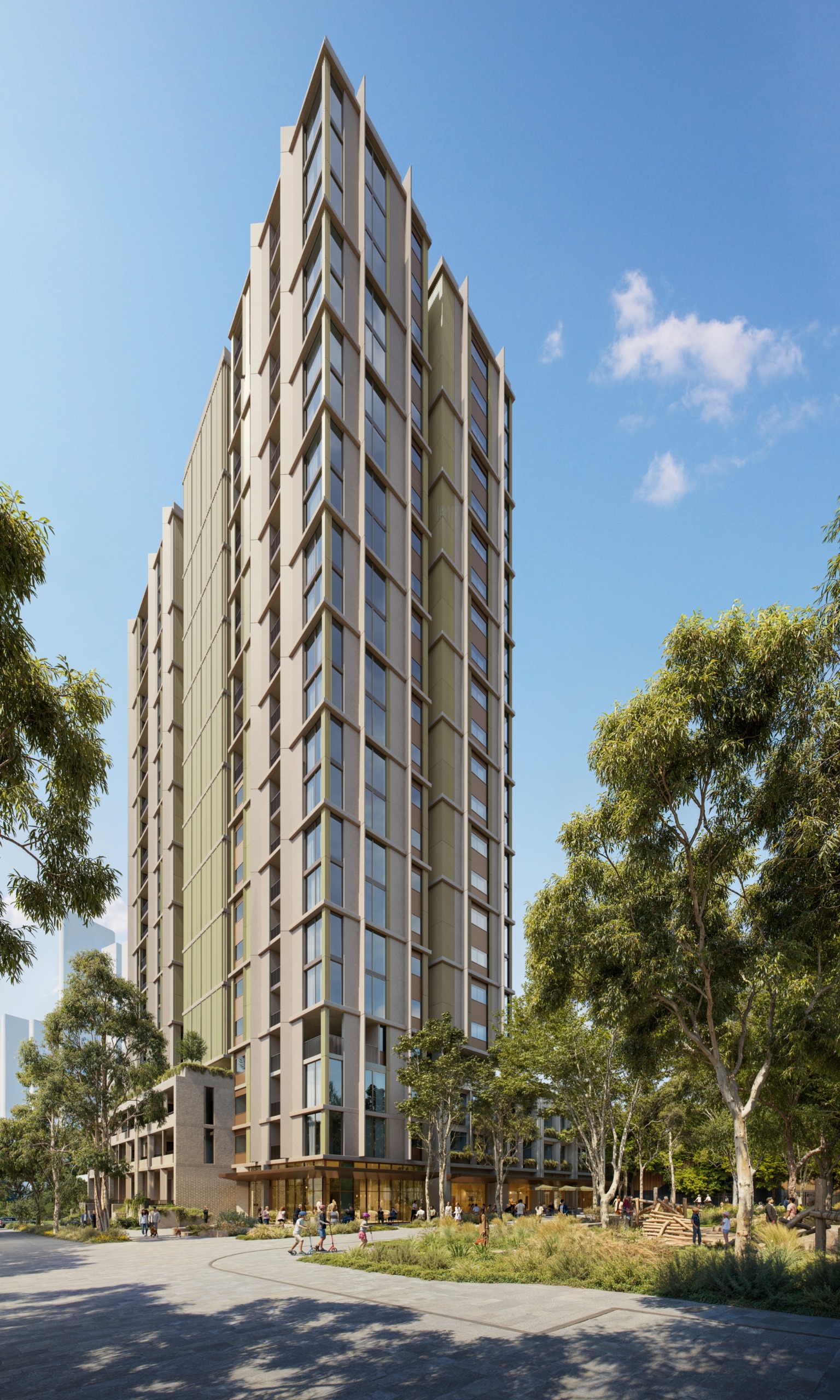
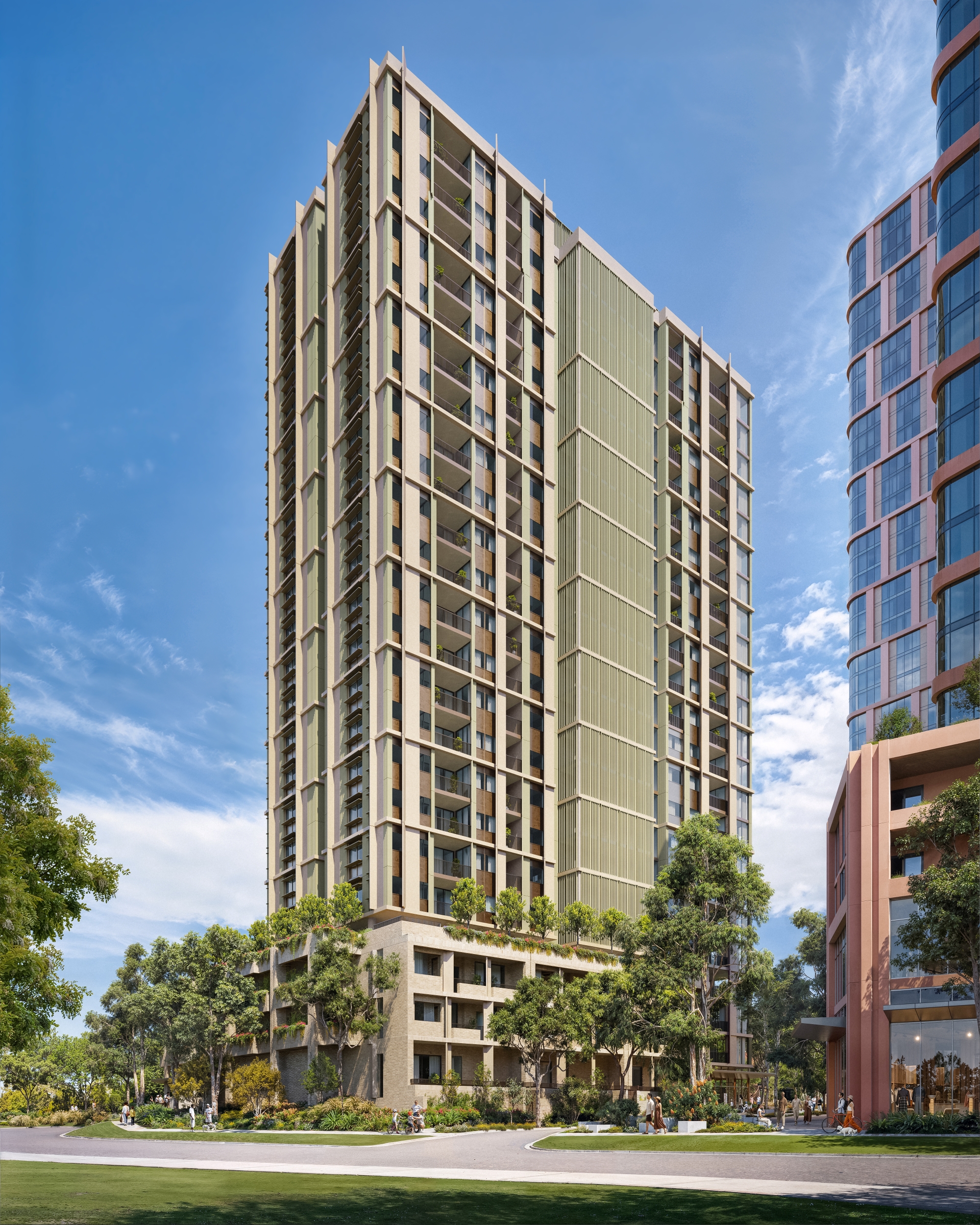
We are seeking approval to deliver a 23-storey (80m) mixed-use building in the northeast portion of the site. The building would feature:
- 180 build-to-rent apartments for essential workers to rent at a discount, with a mix of studios, 1-bed, 2-bed and 3-bed units
- communal areas for residents to socialise and foster community connection
- ground-floor shops
- secure parking for approximately 37 cars, aligned to planning requirements, plus bicycle storage and future provisions for electric vehicle charging.
The building will remain in NSW Government ownership, with tenancies managed by a suitable operator.
Homes NSW is supporting Landcom to define 'essential worker' to inform tenant eligibility, the application process and how rental subsidies will be provided. Further information will be made available closer to project completion.
Why do we need housing for essential workers?
Essential workers like nurses, paramedics, teachers, police officers and firefighters provide invaluable services to people across NSW. Without them NSW would grind to a halt, but many are being priced out of the market and can't afford to live near their jobs.
Commuting long distances adds stress, time and costs to already demanding jobs. On average, a community based key worker spends 1.5 hours per day in their car while a residential based worker (e.g. a home care nurse) spends 2.3 hours per day on public transport (Source: Orchard Talent Group, 2024).
Hospitals, schools and emergency services are struggling to retain staff because housing is unaffordable in the areas where they are located. Without local housing options, we risk understaffing critical services.
The map below shows the percentage of people living in different Sydney areas who are essential workers.

Why essential worker housing in Chatswood?
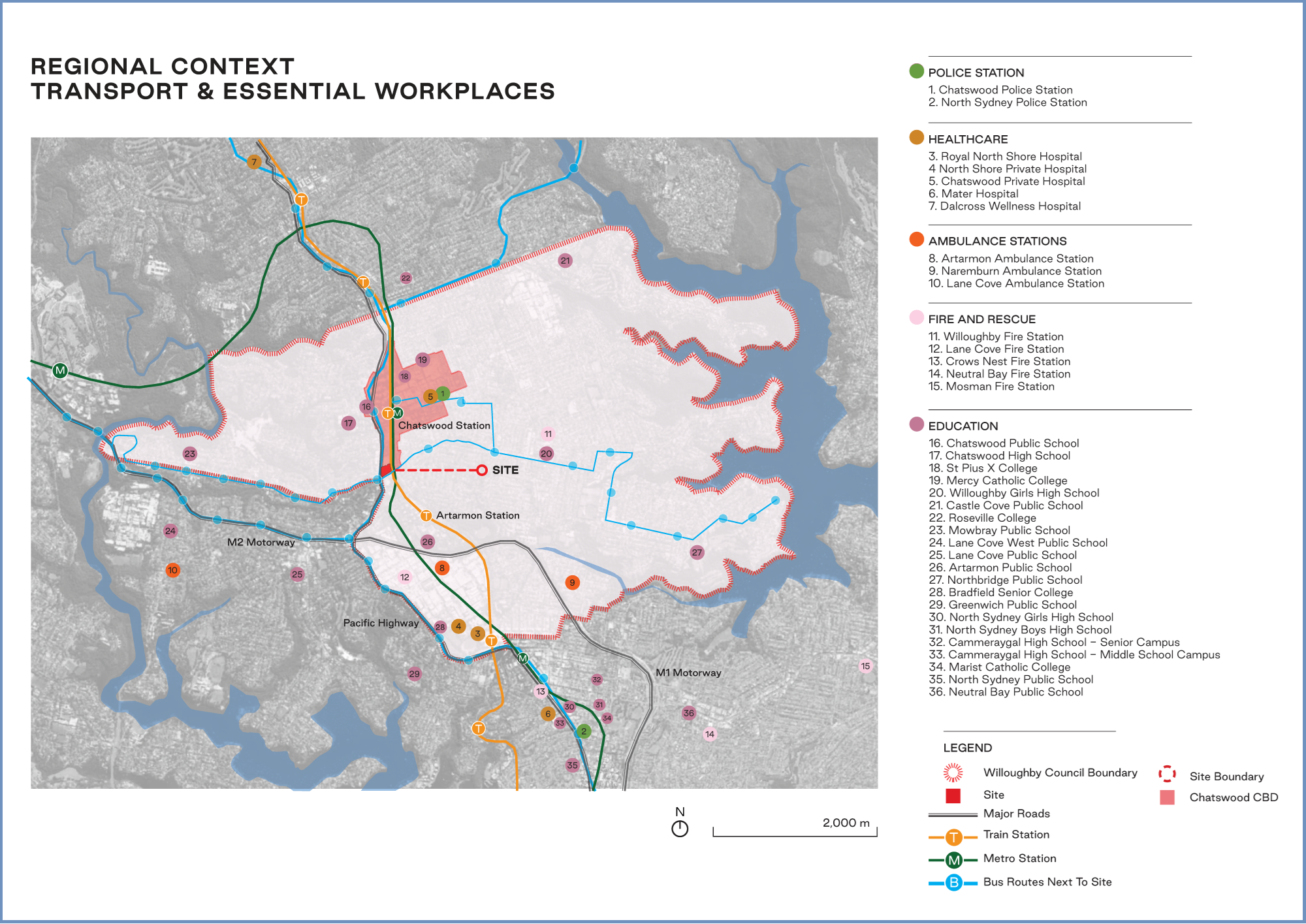
The project is conveniently located near shops and services in Chatswood's bustling city centre, as well as schools and hospitals, with easy access to train, metro and bus services. The map below shows some of the essential workplaces around the site.
What is build-to-rent housing?
Build-to-rent housing is designed and built as long-term rental homes, providing people with secure tenure and stable rents. Build-to-rent, typically delivered as apartments, helps to increase the diversity and affordability of rental supply.
A range of technical studies are being prepared to support our planning for the site to address:
🏘️ Housing needs
🚍 Access, traffic, parking and transport
🛍️ Amenity and social impact
🔊 Noise and air quality
⚠️ Hazardous materials
🏛️ Heritage
🌳 Urban design and landscape design
⚙️ Civil engineering
🌱 Environmental considerations.
Technical studies will form part of our applications to the Department of Planning, Housing and Infrastructure, and can be viewed during public exhibition.
Traffic, parking and transport
ABS data shows that many households in the Chatswood area don’t own a car or have only one car, with more people walking, cycling or using public transport for their commute than is typical across Sydney. This is especially common for households living in apartments, which tend to have fewer people.
Assessments show that local roads will have capacity for traffic generated by the proposed development.
As the site is well-located, future residents are likely to rely less on cars as they can walk, cycle and use public transport to reach work, nearby shops and services.
A shared zone will provide pedestrians with priority over cars in public spaces. The interface between shared zone and vehicle traffic will be carefully managed through visible crossings and landscape treatments.
Parking will be provided in accordance with planning controls.
Heights and visual amenity
To support the NSW Government’s efforts to tackle the housing crisis, we want to make the best use of valuable surplus government land to deliver new public spaces and as many homes as possible near transport, jobs and services.
For Stage 1 of the development, we are seeking approval to deliver a 23-storey build-to-rent building with 180 apartments for essential workers to rent at a discount. The build-to-rent building will be located in the northeast corner of the site to maximise solar access to the proposed central green.
We are continuing concept planning and engaging key stakeholders, like Willoughby City Council, to inform plans for the broader site (Stage 2). Applications for Stage 2 will include a proposal to rezone to enable taller buildings which, subject to further planning and future detailed design, could range in height up to 56 storeys (up to 180m).
A design excellence approach is being applied so that future buildings are visually appealing and positioned to reduce visual bulk and overshadowing, while maximising solar access and cross ventilation for future residents. Buildings will be set back from local roads and have landscaped public spaces and pedestrian laneways. They will be tall with a narrow profile so that shadows move quickly.
The proposal aligns with long-term plans for major transformation in the Chatswood CBD and is in keeping with taller buildings and future potential developments in the area.
Heritage
Local heritage building Mowbray House, which operated as a boarding school from 1906 to 1954, is located in the site's southeast corner and there are other heritage buildings near the site.
We will restore and repurpose Mowbray House for community use, with potential for a ground-floor café facing the central park and opportunity to highlight the building’s local history.
We are consulting Willoughby City Council and government agencies, including Heritage NSW to minimise impacts of the proposed development on the neighbourhood and nearby heritage buildings. We will also consult Council, local community heritage groups and interested parties about future uses for Mowbray House.
We are planning to create a neighbourhood that is better for people and the planet. The new neighbourhood will be low-carbon, full of nature, and a great place to live, work and connect.
What we are doing for sustainability
- Less waste - most construction and demolition waste will be reused or recycled – keeping it out of landfill.
- Better materials - all timber used will be certified and sustainably sourced.
- Preserving history – restoring heritage-listed Mowbray House will provide opportunities for future community use.
- Greener streets and parks - more trees and green spaces will help cool the area, clean the air and support local wildlife.
- Easy access to daily needs - shops, schools and public transport will be within a short walk or bike ride – creating a “20-minute neighbourhood”.
- Smarter buildings - homes and workplaces will use natural light and airflow to reduce the need for air conditioning.
- Saving water and supporting nature - rainwater will be reused in gardens and native plants will help local biodiversity thrive.
How we are measuring success
Demonstrating our commitment to sustainable and resilient places for future generations, we are targeting top sustainability ratings:
- 5-star Green Star Communities rating for the new neighbourhood, focused on creating a healthier, more liveable and future-ready neighbourhood
- 4-star Green Star Buildings rating for build-to-rent apartments, with the design enabling energy efficiency, use of renewables, improved indoor air quality and reduced upfront carbon emissions
- future shops and offices will aim for 5-star NABERS ratings – a government-backed system that measures how environmentally friendly and efficient a building is
- future homes will meet or beat BASIX energy and water efficiency standards – a government initiative that ensures new homes are environmentally friendly and energy-efficient.
Connecting with Country
We recognise our projects fundamentally transform Country forever and we can deliver our projects in a respectful and considerate way to celebrate the uniqueness of each place.
The site is on Gamaragal land. We are working with local First Nations stakeholders to inform design principles to guide project design and development.
Key principles include:
- recognition of Country through landscaping and native plants
- a sense of Country through green and landscaped spaces where people can walk and meander
- a green heart at the centre of the community where people can gather
- opportunity for First Nations public art.
Opportunities to bring these principles to life include:
- Songline Walk along the Pacific Highway
- East and West Country connection through the site
- 6 Seasons Thinking
- Reflecting Sky Country - Emu In The Sky.
The proposed development will contribute to Chatswood's amenity and vibrancy with new shops and services, laneways, landscaped outdoor spaces including a village green, walking and cycling links to the wider area, and future community use of restored locally heritage-listed Mowbray House.
Shops and services
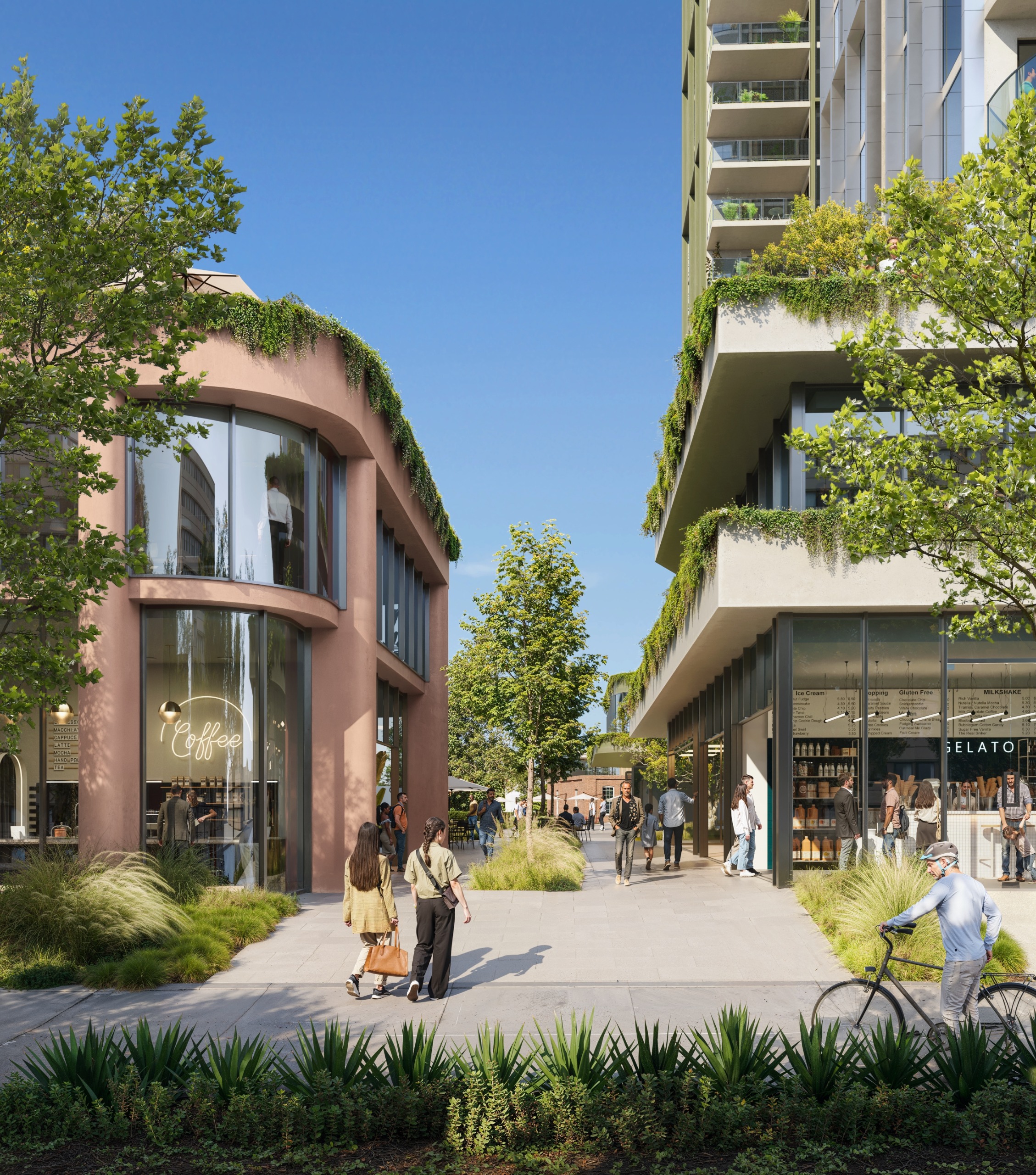
The proposal includes shops and services alongside public spaces to activate the area.
We envisage future tenancies would be suitable for food and beverage, convenience and other specialty retailers, complementing shops and services nearby.
We are preparing a retail strategy to assess current local amenities and provide recommendations for what could be included in future development to help meet the daily needs of local residents, while creating a vibrant destination for people to visit and support the local economy.
Creating an urban oasis
The new development will be set around green spaces supported by shops and services, providing places to gather, exercise and relax at the heart of the new community.
Generous landscaping will feature native plants to support urban biodiversity and increase tree canopy cover to provide shade and cool the air.
Image 1 of 6
Planning and delivery
Planning
To deliver our vision for the Chatswood site, we are progressing a staged planning pathway with the Department of Planning, Housing and Infrastructure.
This will support essential workers to access secure housing as soon as possible while we continue concept planning for the broader site as we want to make the best use of valuable surplus government land to deliver as many homes as possible and new public spaces.
The Department will exhibit the applications we submit, allowing the public to view the plans and technical studies and submit feedback to inform their assessment.
Stage 1: Build-to-rent housing
Applications submitted to the Department in March 2026 include:
- a Planning Proposal to rezone the northeast portion of the site, increasing the current height limit from 18 storeys for the 23-storey build-to-rent building - on exhibition until 15 April 2026
- a State Significant Development Application for Landcom to deliver the build-to-rent building, providing 180 apartments for essential workers - on exhibition until 15 April 2026.
Click the links below to view the Stage 1 applications, including technical studies.
Stage 2: Market housing and public spaces
We are continuing concept planning and engaging key stakeholders to inform plans for the broader site. This work is helping us to understand the site’s opportunities, as well as the potential impacts of future development and opportunities to mitigate them.
Later in 2026 we aim to submit to the Department:
- a Planning Proposal to rezone the site and enable taller buildings which, subject to further planning and future detailed design, could range in height up to 56 storeys (up to 180m)
- a State Significant Development Application for site subdivision and concept development, guiding the design of future buildings, the streets, public areas and open space.
Construction
Pending approvals, early enabling works are expected to start in 2026, followed by construction of the streets, services and open space. Build-to-rent apartment construction is expected to start by early 2027, with the first essential workers expected to move in by late 2028.
Separate development applications will need to be submitted for approval before construction can begin on other buildings.
Community and stakeholder consultation
Our planning is informed by community and stakeholder feedback, planning requirements, site constraints, housing and sustainability targets, and project feasibility.
Between 2 and 27 October 2025 we invited feedback on our proposal from a range of stakeholders including site neighbours, the local community and essential workers.
What we heard
We heard a mix of views, with participants broadly supportive of the proposal to provide apartments near transport, shops and services in the Chatswood town centre, as well as new green spaces, improved walking and cycling connections, and local shops and services. Many acknowledged the need for essential worker housing to be located near employment hubs.
Key concerns raised related to heights and scale of proposed buildings in Stage 2 of the development and the capacity of local infrastructure, including schools, utilities, green spaces and the road network.
Feedback is documented in the Stage 1 Consultation Outcomes Report we submitted to the Department.
We are continuing to consult key stakeholders as planning for Stage 2 progresses. Community and stakeholder feedback relevant to Stage 2 will be documented in a separate Engagement Outcomes Report submitted with these applications to the Department.